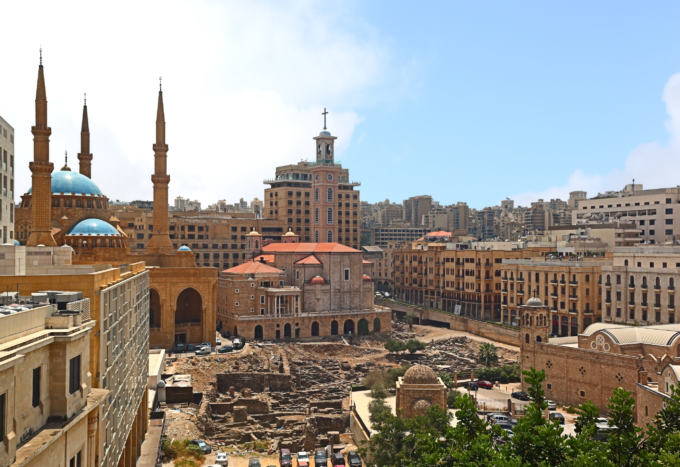

In June 2024, The What If organized a dialogue to explore the importance of a shared historical narrative in Lebanon as a foundation for coexistence.
Objective of the Dialogue:
To explore how Lebanese citizens are navigating collective memory, identity, and historical trauma in Lebanon, and how engaging with the past can lay the foundation for a more peaceful and inclusive future.
Participants’ Backgrounds:
- Jenny Munro, Cultural practitioner, oral historian, and executive producer of the “Maabar” podcast.
- Alia Mansour, Journalist and writer, currently at NOW Lebanon; former member of the Syrian opposition.
- Anthony Tawil, Communication specialist and co-producer of the “Maabar” podcast.
- Moderator: Alexander Karam
5 Key Takeaways
Dealing with the Past Requires Multi-Perspective Engagement
The dialogue emphasized that history in Lebanon is fragmented, often shaped by sectarian narratives and political manipulation. Projects like Maabar, which use oral history and storytelling, allow individuals from diverse backgrounds to explore their past without being forced into binary labels. A key insight was the need to hold space for both personal and collective memory, not to rewrite history but to open it up for reflection and understanding.
History is often taught as a series of facts rather than a skill set for asking critical questions. In Lebanon, there is a push to change this approach, emphasizing history not just as a narrative, but as a habit of asking questions.
Organizations like the Lebanese Association for History (LAH) are leading this change, encouraging people to see history as something we actively shape rather than passively accept.
Jenny Munro
Anger Can Be Channeled Into Constructive Memory Work
Participants described their own journeys from frustration and helplessness to more productive forms of engagement. One speaker, once a “deeply frustrated Lebanese,” now sees value in creating platforms where people can express their war-time memories without fear or judgment. This emotional shift illustrates that civic healing can begin when people feel heard as individuals.
Youth Are Ready for Change, But Intergenerational Work is Also Crucial
While there was clear hope in the younger generation’s openness to rethinking identity, the conversation also highlighted the potential for older generations to reflect and evolve. Life events such as parenthood or political disillusionment can prompt transformation. Engaging both youth and elders in the process of historical reckoning ensures wider societal resilience.
Breaking Sectarian Narratives Starts with Asking ‘Why?’
The dialogue repeatedly returned to the importance of questioning inherited narratives. Whether in education, media, or daily life, fostering a culture of critical inquiry, especially about the civil war, the Syrian occupation, or sectarian divisions, was seen as essential. As one participant said, asking “Why?” helps distinguish between group identity and individual humanity, and makes space for empathy.
Raising questions is far more important than simply providing answers. Encouraging people to think critically and question the status quo is vital. That moment when someone says, ‘Let me think about that,’ or ‘Let me ask a question,’ is incredibly significant.
Alia Mansour
A New National Identity Must Embrace Complexity and Multiplicity
Rather than forcing people into narrow labels like “Sunni,” “Christian,” or “Syrian,” the dialogue proposed a model of identity based on complexity. Participants stressed the importance of embracing layered identities: people who are at once Palestinian, Lebanese, and Syrian; Muslim, Arab, and progressive; or South Lebanese and anti-Hezbollah. Only by making space for these intersections can Lebanon move toward a more inclusive society.
I believe the starting point is acknowledging that we lack a shared national identity, and we need to build it from the ground up. […] When we speak to individuals, we need to find a way to connect their personal narratives to a broader, inclusive national identity
Anthony Tawil
——–
We used AI to help us with the summary of the dialogue’s transcript, and with the copy editing of the final draft.